


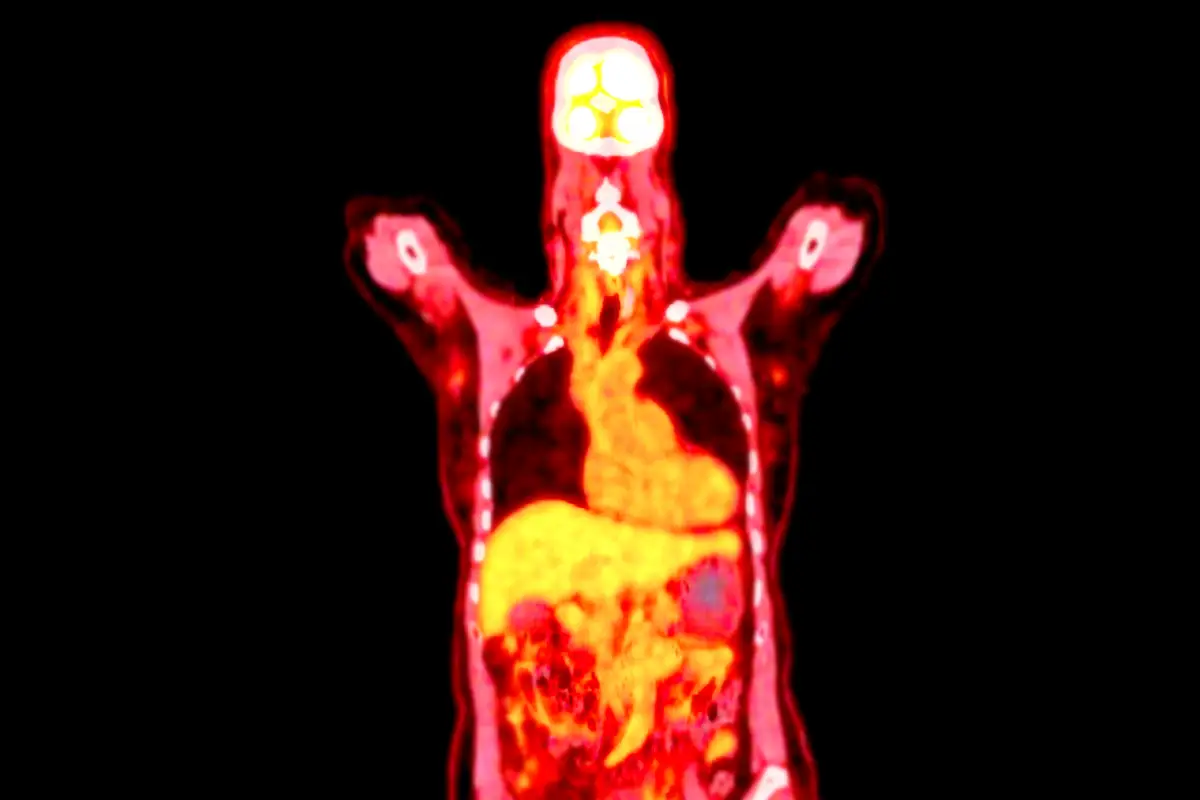
One of the 10 most common cancers in men and women in the United States, renal cell carcinoma (RCC) has long challenged radiologists. Because the kidneys are tucked deep within the abdomen, tumors often evade early detection. When they are found, conventional imaging struggles to reliably distinguish benign from malignant lesions. “Renal cell carcinoma is really a tough disease for imaging,” says Patrick F. Wojtylak, MSHA, CNMT, system manager of nuclear medicine at University Hospitals in Cleveland. “With conventional modalities, you’re largely looking at anatomy—not tumor biology.”
Even when masses are identified, determining their biological behavior—and therefore the most appropriate course of treatment—can be difficult. “In patients with confirmed clear cell RCC (ccRCC), by far the most common renal cell carcinoma, conventional imaging also has limitations for staging,” says Jeremie Calais, MD, PhD, an associate professor of nuclear medicine and theranostics at the University of California, Los Angeles.
A new generation of targeted radiopharmaceuticals in development could help shift this paradigm. By moving beyond anatomy into molecular imaging, these agents promise more precise characterization of renal masses, improved staging accuracy, and the potential to guide therapy in ways not previously possible, Calais says. “Unlike CT or MRI, which rely on size and morphology, radiotracers can target specific molecular features—such as carbonic anhydrase IX (CAIX) expression, mitochondrial activity, and tumor neovasculature—providing insight into tumor subtype and behavior,” he explains. “This allows a more biologically driven diagnosis, sometimes acting as a noninvasive ‘virtual biopsy.’”
Radiopharmaceuticals also can detect very small lesions not yet visible on conventional imaging because detection is based on biological activity rather than size criteria, Calais adds. “Many of these tracers are part of a theranostic paradigm, meaning the same target can be used for both imaging and therapy, enabling better patient selection and more personalized treatment approaches,” he says.
New radiotracers for ccRCC are under development across academia and industry, including efforts in China; the Wisconsin Alumni Research Foundation; ITM Isotope Technologies Munich SE, based in Germany; Telix Pharmaceuticals in Australia; and RayzeBio, a Bristol Myers Squibb company, among others, Calais says. Among the most promising developments are CAIX-targeted PET tracers.
Monoclonal Antibodies
One approach relies on monoclonal antibodies. Telix’s TLX250-Px (⁸⁹Zrgirentuximab) is an investigational antibody-based radiopharmaceutical granted FDA Breakthrough Therapy designation in July 2020. It has been designed to bind selectively to CAIX-expressing tumor cells, where CAIX is expressed on more than 95% of ccRCC cells and is largely absent in normal tissues.
In a Phase 3 trial (ZIRCON), TLX250-Px demonstrated strong diagnostic performance for detecting ccRCC, with sensitivity and specificity in the mid-80% range and a high positive predictive value, including in very small, difficult-to-detect lesions. The trial, which enrolled 300 patients, was published in The Lancet Oncology in September 2024. Follow-on analyses suggest this level of accuracy could influence clinical management, including helping some patients avoid unnecessary biopsy or surgery and supporting more confident decisions between intervention and active surveillance, says Kevin Richardson, CEO of Telix Precision Medicine.
The agent has completed late-stage clinical evaluation and is included in clinical guidelines from leading international expert groups, including SNMMI, the European Association of Nuclear Medicine, and the American College of Nuclear Medicine. Published on the SNMMI website and in The Journal of Nuclear Medicine, the guideline panel concludes that “the emerging use of molecular imaging for risk stratification of indeterminate renal masses offers the opportunity to more effectively characterize such lesions and optimize patient management decisions.”
Another radiopharmaceutical showing promise is ITM’s ITM-94, although it is earlier in development. Early results indicate that ITM-94 PE, like TLX250-Px, can detect ccRCC even in very small renal lesions. Their use can potentially reduce the need for invasive biopsies and help physicians plan optimal surgical management, says Celine Wilke, MD, CMO of ITM. ITM-94 is being evaluated in an ongoing, multicenter, open-label, multipart Phase 1/2 clinical trial. One component compares its ability to detect ccRCC in patients with indeterminate renal masses, with histopathology serving as the reference standard. Early findings suggest a high tumor-to-background ratio in ccRCC, along with a favorable safety and tolerability profile. These remain early-stage data for ITM-94, and more detailed results are pending, Wilke says.
Reducing Uncertainty
The ability to better characterize indeterminate renal masses could be one of the most immediate and impactful applications of these agents. “CAIX-targeted imaging can help guide management of indeterminate renal masses, potentially reducing unnecessary invasive surgeries,” says Ashwin Singh Parihar, MD, an assistant professor of radiology at the Mallinckrodt Institute of Radiology at WashU Medicine in St Louis.
In practical terms, this could mean fewer patients undergoing partial or total nephrectomy for lesions that ultimately pose little risk. At the same time, earlier and more accurate identification of malignant tumors could lead to more timely intervention, Parihar says.
Beyond primary tumor characterization, these tracers also may enhance staging. “There is certainly potential to detect small-volume or atypical metastases not well characterized on conventional imaging,” Parihar notes. Wojtylak adds that whole-body PET imaging provides a significant advantage in evaluating disease spread in a single exam, directly influencing treatment decisions and helping determine whether tumors have been fully resected.
Improved staging accuracy is critical in RCC, where treatment decisions often hinge on disease extent. Identifying metastatic spread earlier can influence whether patients are candidates for surgery, systemic therapy, or a combination of approaches, Parihar and Calais say.
Treatment Planning and Monitoring
The implications extend beyond diagnosis. As targeted therapies and immunotherapies become increasingly central to RCC treatment, the need for more precise tools to guide and monitor therapy is growing. Radiopharmaceutical imaging may help fill that gap.
“These tracers enable noninvasive tumor characterization and may improve staging accuracy, influencing surgical vs systemic therapy decisions,” Parihar explains. “There is also an emerging role in monitoring response, especially for targeted therapies and immunotherapy.”
Unlike conventional imaging, which primarily assesses changes in tumor size, molecular imaging can provide insight into tumor biology and activity. This may allow clinicians to evaluate treatment response earlier and more accurately, potentially enabling more timely adjustments in therapy, Parihar says.
Emerging tracers are also expanding the biologic information available. Fibroblast activation protein inhibitor agents target the tumor microenvironment, while hypoxia- and PD-L1-directed tracers aim to characterize tumor biology and immune activity—areas of growing relevance in RCC.
One of the most intriguing aspects of CAIX-targeted imaging is its potential role in theranostics—the pairing of diagnostic imaging with targeted radiopharmaceutical therapy. Both TLX250 and ITM-94 exemplify this approach.
“Our TLX250 platform reflects the core promise of theranostics—linking diagnosis and therapy through a shared biological target to guide more precise, individualized care,” Richardson says. “By identifying patients whose tumors express CAIX, this approach helps ensure treatment is directed to those most likely to benefit, with the potential to improve decision-making and outcomes in advanced ccRCC.”
ITM-94 is designed as a companion diagnostic to ITM-91, a therapeutic agent labeled with lutetium-177. Together, they form a theranostic pair: ITM-94 identifies patients whose tumors express CAIX, while ITM-91 delivers targeted radiation to those tumors. “If you can see the tumor with one agent, you can potentially treat it with the same molecule labeled with a therapeutic isotope,” Wojtylak explains.
This strategy could enable more personalized treatment by ensuring that only patients likely to benefit receive therapy. In advanced ccRCC, where treatment options can be limited and outcomes remain variable, such precision could be transformative, Wojtylak says.
While radiopharmaceuticals may play a significant role in ccRCC, Calais does not see them replacing conventional imaging entirely. “For renal mass characterization, the most realistic scenario is a complementary approach,” he says. CT and MRI already perform well in many cases, but “there remains a subset of indeterminate renal masses where conventional imaging is insufficient.” In these patients, molecular imaging could play a decisive role—provided strong evidence demonstrates clear diagnostic accuracy, meaningful clinical impact, and feasible logistics.
For whole-body metastatic staging, however, PET—given its sensitivity to biologically active disease—has the potential to replace CT or MRI in certain settings, Calais adds.
Adoption and Challenges
Despite their promise, these agents are unlikely to become ubiquitous in the near term. “Adoption will likely be incremental over the next three to five years,” Parihar says. “It will start in academic and tertiary care centers and gradually expand.” Early use is expected to focus on niche indications—such as evaluating indeterminate renal masses—before broadening into wider clinical applications.
Several factors will influence adoption, including regulatory approval and reimbursement. While not yet approved by the FDA, TLX250-Px has completed Phase 3 evaluation and has FDA Breakthrough designation. Telix is preparing to resubmit a biologics license application in the United States and pursue additional global regulatory filings and indication expansions, Richardson says. The company also has established access pathways for eligible patients outside clinical trials, including compassionate use in the United States, named patient programs in Europe, and a special access scheme in Australia.
ITM-94 has not yet been approved by the FDA and remains in clinical evaluation. In November 2025, ITM-94 received FDA Fast Track designation based on its potential to address an unmet medical need in ccRCC. Fast Track designation enables more frequent interactions with the FDA during clinical development and potential expedited review pathways if certain criteria are met. Initial completion of ITM-94 PET imaging in indeterminate renal masses as part of the ongoing Phase 1/2 trial is anticipated in 2027, Wilke says.
Operational considerations also will play a role. Some newer agents—particularly zirconium-89-labeled tracers—require delayed imaging protocols, with patients returning several days after injection, often around five days later. This differs from traditional PET workflows and introduces logistical challenges, Wojtylak says.
Scheduling becomes more complex, requiring coordination of separate appointments, which may be inconvenient for patients. “For imaging centers, it disrupts established PET workflows built around same-day throughput and predictable timing,” he says. Adopting these agents will require adjustments to scheduling, patient communication, and potentially radiation safety protocols.
Still, these hurdles are likely manageable. “The tradeoff may be worthwhile, given the potential for improved diagnostic accuracy,” Wojtylak says.
Clinical Utility
From a safety standpoint, early data on CAIX-targeted tracers have been encouraging. “Safety profiles are generally favorable, with most agents showing low toxicity in early trials, as expected with diagnostic radiopharmaceuticals,” Parihar says.
Importantly, these techniques may offer a safer alternative for some patients. Unlike iodinated CT contrast or gadolinium-based MRI agents, many radiotracers do not carry the same nephrotoxic risks, making them particularly valuable for patients with compromised kidney function, Wojtylak says.
However, safety alone will not drive adoption. Demonstrating clear clinical utility—showing meaningful added value over existing imaging modalities—will be essential. “The primary hurdle is demonstrating clinical utility,” Parihar emphasizes. “That means proving added value over standard-of-care tools.” Cost, tracer production, and distribution logistics also will factor in, he says.
“It’s still early,” Wojtylak agrees. “Availability, regulatory pathways and standardization are all hurdles that must be overcome before widespread adoption.”
Calais emphasizes that a multidisciplinary approach is essential to fully realize the value of these technologies. “Training in PET/CT and nuclear medicine, as well as understanding renal mass biology, is required to interpret findings in the right clinical context,” he says. “Ideally, this is complemented by radiology training and oncology expertise, allowing integration of imaging results into treatment decision-making.” In practice, he adds, optimal outcomes come from multidisciplinary collaboration, often through dedicated tumor boards where nuclear medicine physicians, radiologists, urologists, and oncologists interpret findings together and determine the best course of action.
As research continues, the role of radiopharmaceuticals in RCC is likely to expand. Advances in tracer development, imaging technology, and theranostic strategies are converging to create new possibilities for diagnosis and treatment. For radiologists, these developments represent both opportunity and challenge. Integrating molecular imaging into clinical practice will require new workflows, expertise, and collaboration across specialties.
Yet the potential benefits are substantial. By improving diagnostic confidence, guiding treatment decisions, and enabling more precise monitoring, these agents could significantly enhance patient care, Calais says.
While questions remain—and widespread adoption may still be several years away—the trajectory is clear. The era of purely anatomic imaging in RCC is giving way to a more nuanced, biology-driven approach. For a disease with no simple solutions, this change could have a significant impact. “Overall,” Calais says, “the goal is clear: better diagnosis, better treatment decisions, and ultimately improved quality of life for patients.”
— Beth W. Orenstein of Northampton, Pennsylvania, is a freelance medical writer and regular contributor to Radiology Today.