

 May/June 2026 Issue
Editor’s Note: Steps Forward
By Dave Yeager
Radiology Today
Vol. 27 No. 3 P. 4
Medical imaging is a rapidly changing field, with advances coming from many directions. These steps are moving the field forward and improving care and access for patients. Although AI has been and remains a significant source of innovation, advances in equipment (often assisted by AI) continue to streamline workflow and improve treatments. In this issue, we’re highlighting some of the trends that are changing medical care and helping medical professionals provide better care, where and when it’s needed.
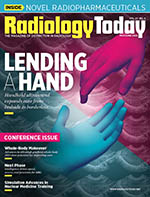
In this month’s cover feature, Rebecca Montz looks at trends in handheld ultrasound. Access, speed, and quality are making ultrasound more accessible, and as with many other areas of radiology (and the world), AI is helping to enhance its utility. Handheld ultrasound is finding its way into more care settings and being used in more scenarios than ever before. It is quickly becoming a crucial point of care tool in hospitals, outpatient clinics, alternate care sites, and rural or underserved areas.
MRI technology is advancing, as well. Jessica Zimmer speaks with experts on ultrahigh gradient (UHG) whole-body MRI about the potential uses of this emerging technique. Coupled with ultrahigh field MRI, UHG MRI offers additional uses, such as for MR elastography. Although currently in use in clinical settings, UHG MRI does present some challenges that will need to be addressed going forward. A conference held in March brought experts from all over the world to discuss UHG MRI’s potential.
MRI is evolving in many ways. From faster scans to reduced reliance on helium to improving operational efficiency, manufacturers are making strides in tailoring MRI platforms to meet today’s needs. Keith Loria has a round-up of the latest advances. Turn to page 20 for more details.
New technology is also shaping care and treatment for clear cell renal cell carcinoma (ccRCC). Conventional imaging has limitations for staging ccRCC, but new radiopharmaceuticals show promise for more precise characterization of renal masses and the ability to identify smaller lesions that are not visible on conventional imaging. The new radiopharmaceuticals have the potential to improve cancer staging and guide therapies in ways that were not previously possible. Beth W. Orenstein details some of the new approaches. Although there is still much work to do, experts expect the role of radiopharmaceuticals in identifying and treating ccRCC to grow.
Enjoy the issue.
— Dave Yeager
david.yeager@gvpub.com
