


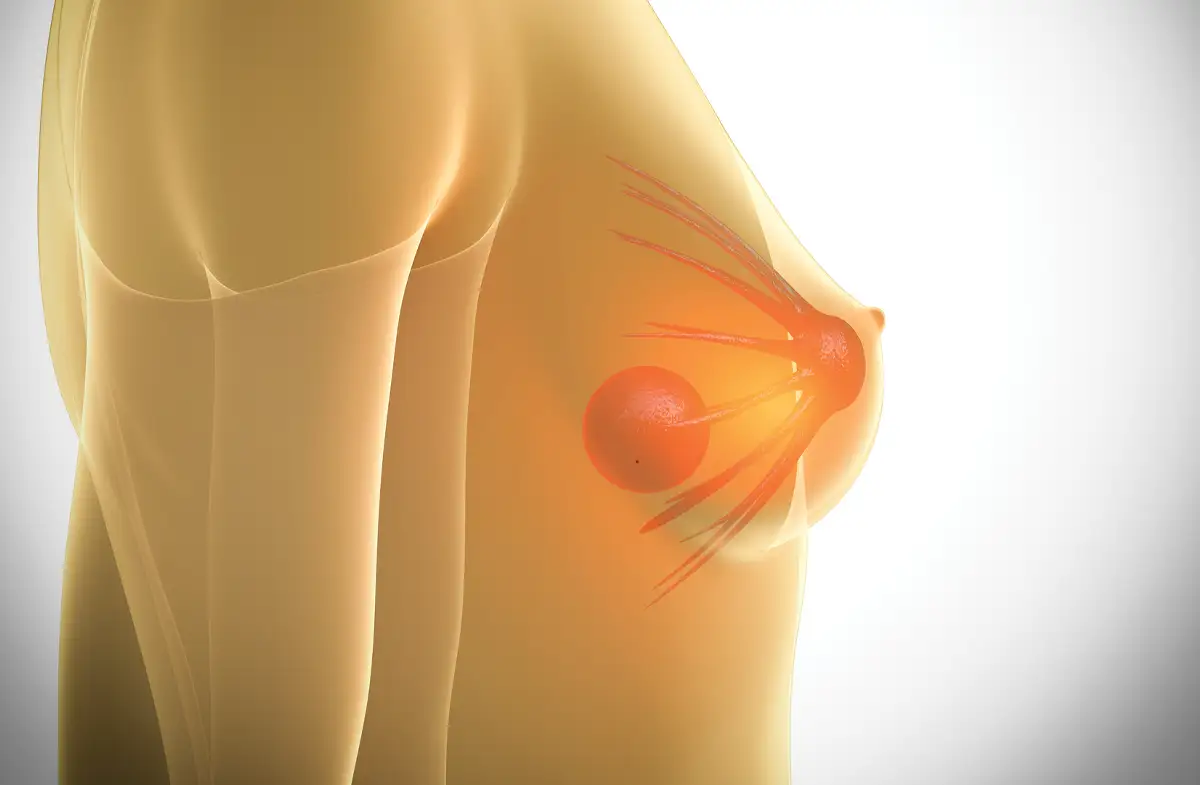
Researchers at the Huntsman Cancer Center in Utah have developed a cutting-edge MRguided focused ultrasound (MRgFUS) technique that ablates breast cancer tumors without patients needing to go under a knife. The Muse Magnetic Resonance-Guided Focused Ultrasound System, as it’s known, has been under development for the past decade and was invented by a group of researchers in the radiology and imaging sciences department at the University of Utah.
“The initial goal was to develop a system that could provide noninvasive treatment for localized breast tumors and use MRI to measure temperature in real time during the treatment,” says Cindy B. Matsen, MD, MSCI, FACS, an associate professor in the department of surgery for the Huntsman Cancer Institute at the University of Utah. “Breast cancer treatment has evolved over the past 50 years towards less aggressive, less invasive methods that efficaciously treat the cancer while reducing toxicity and morbidity effects. MRgFUS could allow the treatment of a subset of breast tumors and eliminate a surgical procedure.”
Matsen explains that, while ultrasound is often applied in medicine for imaging only, this technique applies ultrasound at a higher power level and focuses the waves to an extremely small point.
“The mechanical pressure wave, in our case, is converted to heat and causes thermal tissue damage,” she says. “We use MRI to plan, monitor, and assess these treatments. Because MRI can measure temperature rise in real time, we are able to monitor and control this heat distribution on an individualized basis.”
In addition, it’s an outpatient procedure, and the patient is awake the entire time.
Muse is currently being evaluated in two clinical trials. One is led by Jean Palussiere, MD, at the Insitut Bergonié in Bordeaux, France. The second is being led by Matsen at the Huntsman Cancer Institute.
The objective of the trials is to evaluate the safety and tolerability of soft tissue ablation with MRgFUS as assessed by subject- reported procedural pain and incidence of device- and procedure-related adverse device effects and adverse events, as well as estimate ablation efficacy, disease-free survival at five years postablation, and overall survival in the study population at five years postablation.
“Both of these are feasibility trials that are treat-and-resect studies primarily evaluating the safety of the device, the impact and experience of the patient, and the potential efficacy of the treatment,” Matsen says. “All patients in these studies undergo both MRgFUS ablation and surgical resection of their tumors.”
Noninvasive Option
The system centers around a special table developed to help patients feel comfortable in the MRI machine for several hours, as it takes that long for the device to deliver ultrasound waves straight into the tumor, concentrating the energy into a point as tiny as a grain of rice. While this could be a game changer for breast cancer, the system is not without its challenges.
“Integration into clinical workflow is a big hurdle,” Matsen says. “Because this is a trial, there are multiple visits required which can be difficult, especially for people who live far away, which is common in the Mountain West. This is also being applied to a limited number of breast cancer patients, and there are many who don’t qualify.”
However, a major hurdle is one of the key benefits—it is a noninvasive treatment.
“We need imaging that is very accurate to ensure that the treatment is efficacious,” Matsen says. “It could be considered an option for some patient populations sooner than others, such as those with benign breast tumors; small, slow-growing breast cancer; elderly patients; or patients with health issues that make surgery unsafe.”
Nicole Winkler, MD, an associate professor of radiology at the University of Utah and Huntsman Cancer Institute, serves as the radiologist on the trial and located the tumors on MRI for the actual procedures.
“The main learning curve is positioning the patient’s breast in the device for the ablation as the water bath causes the breast to be in a slightly different shape than the preprocedure breast MRI, which is done without a water bath,” she says. “Since we already know what the tumor looks like based on the preprocedure imaging, I just have to consider how the change in shape of the breast may slightly alter the shape and location of the tumor.”
While the use of MRgFUS in everyday practice is still years away, the researchers at the Huntsman Cancer Center hope that this technology will provide a good alternative to surgery for some breast cancer patients.
“We deeply appreciate the patients who are helping us learn and develop this technology,” Matsen says. “They will make things better for future patients.”
— Keith Loria is a freelance writer based in Oakton, Virginia. He is a frequent contributor to Radiology Today.