


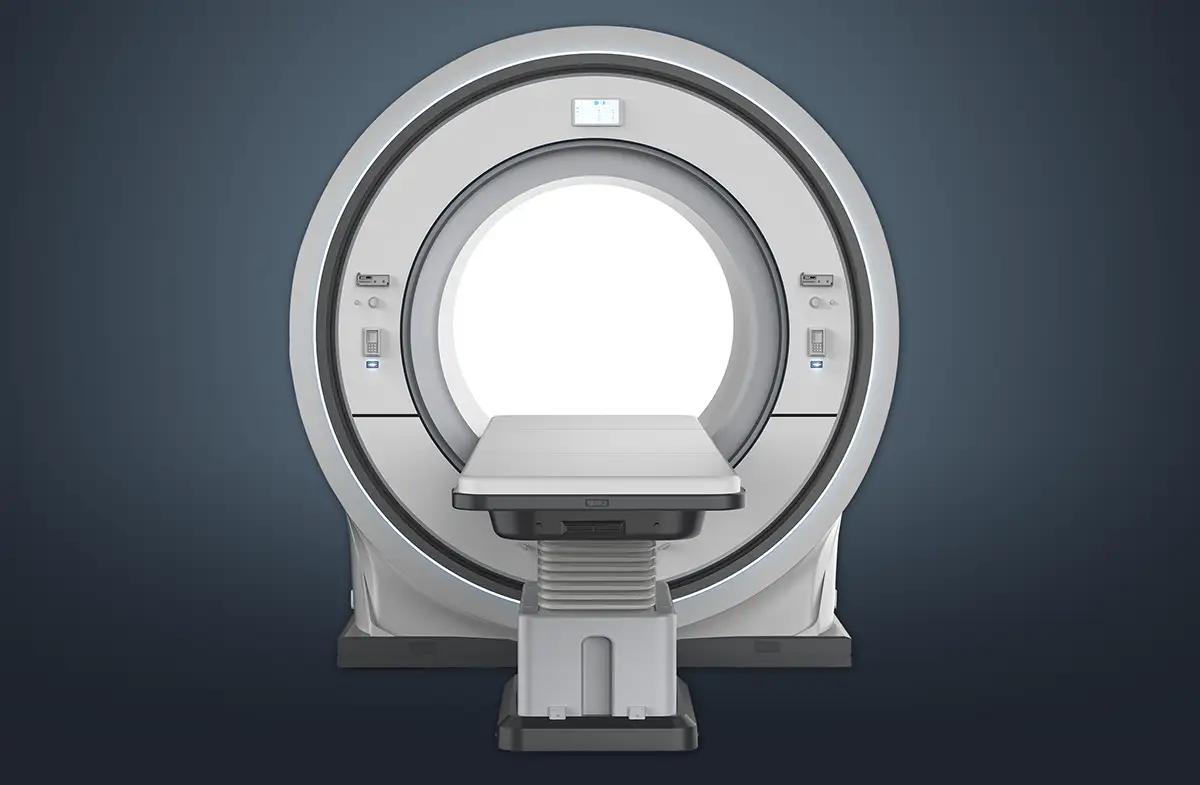
Interventional medicine has always been about breaking boundaries. Over the past few decades, we have witnessed remarkable advances that have fundamentally changed the way we diagnose and treat patients. Minimally invasive procedures have become the standard of care for numerous conditions, providing patients with faster recoveries, reduced pain, and improved outcomes. But as we continue to push the limits of what’s possible, one challenge remains: How can we see more, earlier, and precisely so we can do more for patients? That’s where interventional MRI (iMRI) enters the picture.
In the interventional suite, visualization is everything. Our ability to treat disease depends on our ability to detect it, target it, and monitor therapy in real-time. For years, we’ve relied on fluoroscopy, CT, and ultrasound to guide our procedures. Each of these modalities offers its unique advantages. Still, they also have limitations—especially when it comes to real-time visualization, soft-tissue contrast, exposure to ionizing radiation, and the need for repeated imaging to confirm results.
MRI, on the other hand, offers unparalleled soft-tissue resolution, functional imaging capabilities, and, importantly, does not use ionizing radiation. Until now, logistical and technical barriers have prevented MRI from being widely used in the interventional suite. But that is changing.
The Case for iMRI
Transforming MRI from a diagnostic to a procedural modality is a game-changer for several reasons.
Superior Soft-Tissue Visualization
MRI provides the best delineation of soft tissue targets—tumors, nerves, vessels, and organs—without the limitations of X-ray–based imaging. This is particularly valuable in neurosurgery, musculoskeletal procedures, and specific oncological procedures.
Real-Time Monitoring and Adaptation
iMRI allows us to adapt our approach as the procedure unfolds. We can confirm tissue changes, adjust our targeting, and verify therapeutic effects in real-time, reducing the need for repeat interventions.
Patient and Provider Safety
By eliminating exposure to ionizing radiation, iMRI creates a safer environment for patients, physicians, and staff, particularly during complex and lengthy procedures.
Expanding Possibilities
Most exciting, as new therapies—such as targeted therapeutic delivery and treatment of micro rather than macro abnormalities— emerge, iMRI becomes not just a tool of today but a platform for the future.
The adoption of iMRI has been limited by cost, complexity, lack of dedicated devices, and the need for workflow integration. However, with recent advances in MRI-compatible devices, imaging software, and streamlined operating room designs, these barriers are coming down. Collaborations between device manufacturers, imaging companies, and clinical teams are accelerating the pace of innovation.
At its core, iMRI is not just about better pictures—it’s about better care. It’s about giving interventionalists the confidence to achieve technical success and patients the best chance at optimal outcomes. As technology becomes more accessible, I believe the adoption of iMRI will accelerate, making it a cornerstone of modern interventional medicine.
We are at a pivotal moment. The tools are here, and more are coming. The need is clear. Now is the time for our field to embrace and develop iMRI, not as a luxury or a niche but as the new standard for safety, precision, and patient-centered care. It’s time to see more, so we can do more for every patient who depends on us.
— John Kaufman, MD, MS, is CMO at Cook Medical. He’s an educator, leader, and clinical researcher, and has dedicated his career to advancing minimally invasive therapies in interventional medicine.