


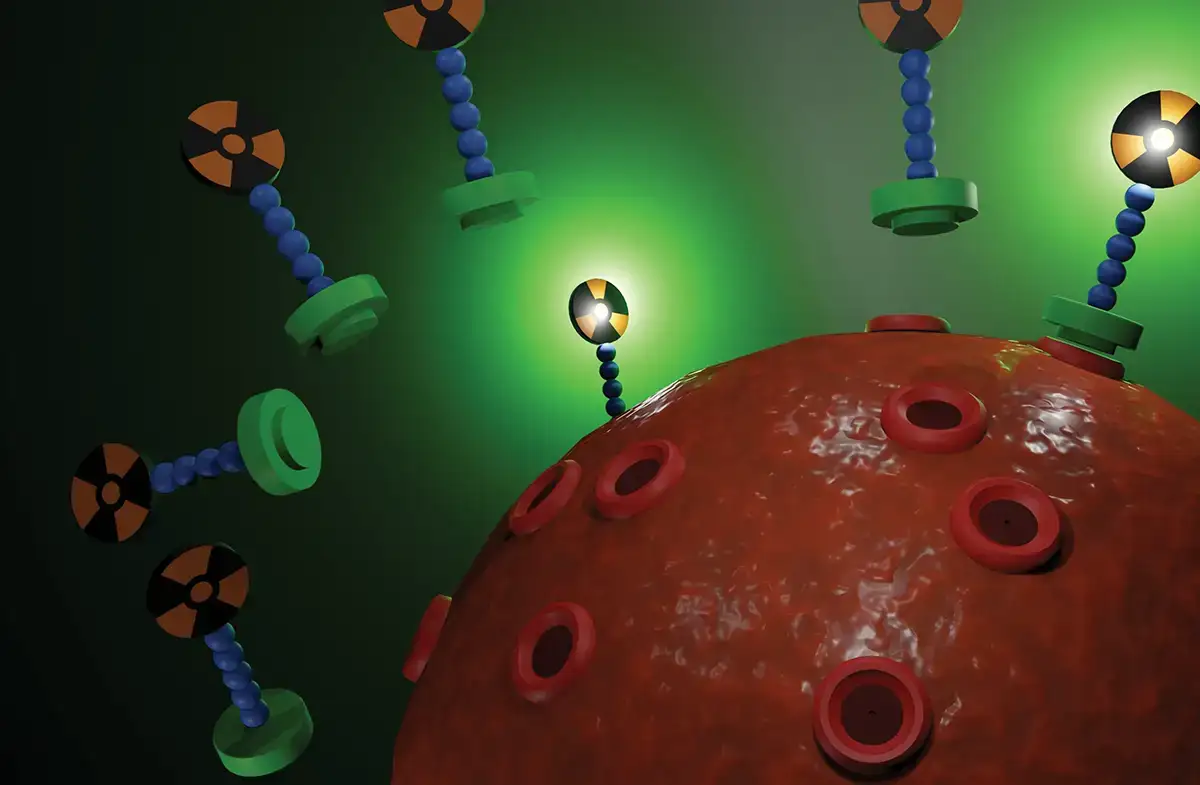
Cancer care is entering a more precise and personalized era. As advances in precision medicine reshape how clinicians detect and treat disease, therapies that were once highly specialized are beginning to find a broader footing. Radioligand therapy (RLT) is one of those approaches. Though initially used in a narrow set of cases, it’s now emerging as a more widely applicable tool in oncology.
Backed by growing clinical validation and propelled by improvements in imaging and targeting technologies, RLT is gaining momentum quickly. Researchers and clinicians are exploring new frontiers for its use, expanding its reach beyond prostate cancer and neuroendocrine tumors. As this next chapter unfolds, the future of RLT will be defined not just by where it’s been, but where it’s headed.
Why Now?
A therapy that has been in development for decades is now entering a pivotal moment in clinical practice, though many remain unfamiliar with the principles and potential of RLT. RLT is a targeted treatment approach that involves linking a radioactive isotope to a ligand—a molecule designed to bind to cancer cells with specific surface markers. Once the ligand attaches to its target, the radioactive payload delivers localized radiation, destroying the cancer cell while minimizing damage to surrounding healthy tissue.
Several recent developments have accelerated the growth of RLT, including pivotal FDA approvals for prostate cancer and neuroendocrine tumors. One notable example is Lu-PSMA-617, a therapy designed to target prostate cancer cells by binding to prostate-specific membrane antigen (PSMA)—a marker commonly found on their surface.
Clinical trials have shown that RLT can significantly extend survival and improve quality of life, especially for patients whose cancers no longer respond to chemotherapy or external radiation. Its precision allows radiation to be concentrated on cancer cells, minimizing damage to healthy tissue. This targeted approach reduces common side effects such as fatigue, nausea, and hair loss, and also improves the overall treatment experience, offering patients a better quality of life during care.
Access Expanded
Advances in imaging are making RLT smarter, safer, and more effective, improving the precision of treatment and the ability to match patients with the right therapy. Techniques such as PET and SPECT scans enable clinicians to visualize radiolabeled molecules in the body and assess whether a tumor expresses the specific markers required for RLT. This step is essential for patient selection, ensuring that only those most likely to benefit are offered the therapy, while others are spared from unnecessary treatment.
Imaging also plays a critical role during the treatment itself. Real-time monitoring allows clinicians to track how effectively the radioactive isotopes target tumors and confirm that healthy tissue is not impacted. This feedback loop enhances treatment precision and reduces the likelihood of side effects.
Beyond improving patient selection and monitoring; imaging advancements are paving the way for future applications. As these techniques improve, they help identify new biomarkers to expand the range of cancers RLT can treat, further increasing its clinical applications.
Oncological Implications
RLT holds significant potential as ongoing research and technological advancements pave the way for new applications and expanded indications. Early studies are exploring RLT’s use in treating a broader range of solid tumors, including kidney, breast, lung, and ovarian cancers, where targeted treatment options have historically been limited. In parallel, researchers are investigating how RLT could be combined with other therapies, such as chemotherapy, immunotherapy, and external radiation, to deliver a more comprehensive and coordinated attack on cancer. There is also growing interest in optimizing the therapeutic effect by using different radionuclides, either individually or in combination, tailored to the biology of specific tumor types.
However, fully realizing the potential of RLT will require overcoming several challenges. A key hurdle in early research is identifying tumor-specific markers that can serve as reliable targets for new RLT agents. Beyond discovery, broader clinical adoption will depend on the availability of advanced imaging technologies, including PET and SPECT, which are essential for selecting appropriate patients and monitoring treatment effectiveness. Widespread access will also require significant investment in infrastructure to support the safe preparation and administration of radiopharmaceutical therapies.
As RLT further integrates into cancer care, ensuring optimal outcomes will depend on cross-disciplinary collaboration. Radiologists and nuclear medicine specialists will require specialized training to guide treatment decisions. Close coordination between oncology, radiology, and nuclear medicine teams will be essential to fully realizing the benefits of this highly targeted treatment approach.
The New Standard
Research is expanding the use of RLT into new cancer types, novel combinations, and earlier lines of therapy. For example, it is moving from third-line to first-line treatment settings in neuroendocrine tumors. With more than 100 ongoing studies, this growing body of research will help define where and how RLT fits into the broader oncology landscape.
As evidence builds and imaging technologies continue to advance, RLT has the potential to evolve from a specialized therapy into a standard treatment option for a wide range of cancers. The long-term vision is to integrate RLT as a routine part of cancer care, offering a highly targeted, effective alternative to traditional therapies and improving patient outcomes worldwide.
— Antoine Attinger is the associate director of translational pharmacology at Debiopharm, where he leads preclinical research and development efforts focused on advancing targeted therapies in oncology.