


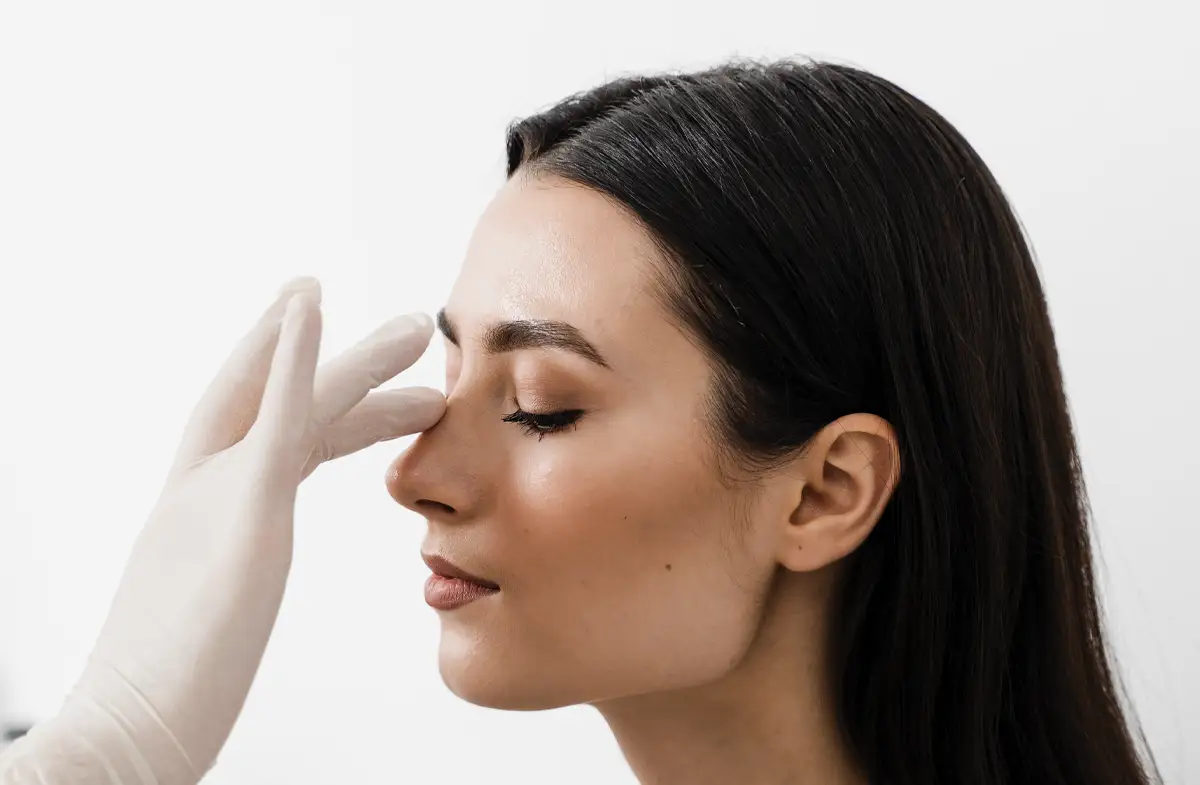
Dentists have been using ultrasound in their practices for many years to perform dental procedures and surgeries. More facial plastic surgeons are now using ultrasound to perform rhinoplasty.
Rhinoplasty was developed in the late 1800s. The first modern rhinoplasty was performed in the United States in 1887 by John Orlando Roe, MD, an otolaryngologist in Rochester, New York.
The traditional method requires a mechanical rasp on the nasal bone and a knife on the cartilage of the nose. These tools produce significant trauma to the overlying skin and the procedure requires a long healing time, says Sam Rizk, MD, a double board-certified surgeon in facial plastic surgery, reconstructive surgery, and otolaryngology (head and neck) surgery in New York. “Because we’re using two different methods, the point where the bone and cartilage connect—a spot on the bridge of the nose we refer to as the keystone area—is never perfectly smooth,” Rizk says.
Shaping Up
Piezo Ultrasonic Rhinoplasty, which uses sound waves to reshape the nasal bones, was introduced in 2004. The word “Piezo” comes from the Greek word meaning compress or pressure. But it wasn’t until November 2017 that the FDA approved the first Piezo device for rhinoplasty, says Manish Shah, MD, FACS, a boardcertified plastic surgeon in South Denver who, like Rizk, was an early adopter. Shah began offering Piezo Ultrasonic Rhinoplasty in 2018. Recently, ultrasonic rhinoplasty has become more widely available and more popular.
Rizk and Shah are fans of the method and say that anyone healthy enough for traditional rhinoplasty is likely a good candidate for ultrasonic rhinoplasty. The procedure takes about two to three hours to perform. That’s about 15 to 20 minutes longer than traditional rhinoplasty. “Nothing crazy,” Shah says.
Ultrasonic devices use high-speed sound waves to create vibrations in the tissue, Shah explains. The vibrations gently break apart tissue surfaces, allowing the surgeon to remove surface irregularities and cut tissues, Shah says. “The ultrasonic method avoids damage to underlying structures. It treats the areas that need treating in a highly targeted and precise way. Damage to surrounding tissue is kept to a minimum.”
“Ultrasonic rhinoplasty is a much more accurate way to file a bump or narrow the bones of the nose than traditional rhinoplasty,” Rizk says. “The way the device works is by emitting high-speed sound waves to tiny cutting and shaving tip inserts that we then use to shape the nasal bones.”
Shah says the tips can be used for four to six ultrasonic procedures before needing to be replaced. He notes that they are rather expensive. Shah charges his patients the same whether they have traditional or ultrasonic rhinoplasty. “I don’t want patients to make a decision based on cost,” he says. “If they are good candidates for ultrasonic rhinoplasty, they will get it.” Some practices charge more for ultrasound rhinoplasty than traditional rhinoplasty.
On Target
The advantage of ultrasound over the rasps, hammers, and chisels used in traditional rhinoplasty is that it creates much less trauma to the surrounding area, resulting in less bruising and much shorter recovery times, Rizk says.
“Also,” Shah says, “the nose looks more presentable to the public sooner, and the long-term result is enhanced at the oneyear full healing mark.”
Yet another advantage of ultrasonic rhinoplasty is that the revision rates are much lower than with traditional rhinoplasty, Rizk says. Patients wear a nasal splint for about a week afterward and need to sleep with their head elevated and use ice packs to soothe discomfort, much like with traditional rhinoplasty.
Ultrasonic rhinoplasty requires extensive training and expertise in the technique, in addition to specialized equipment. The training and equipment requirements could help explain why, although the method was FDA-approved more than seven years ago, it only recently became more available. “Generally, the adoption of new techniques in surgery often takes time as surgeons need to become familiar with the procedure and its outcomes before incorporating it into their practice,” says Rizk, noting that he “learned the importance of embracing every opportunity to learn and grow as a surgeon” early in his career.
The ultrasonic technique can be used for both open or closed rhinoplasty. Shah says that beginners only perform open rhinoplasty with the Piezo method. “Once you get used to it, you can do it for closed procedures as well,” he says. It is harder to use the technique on a closed procedure, he says. The technique can generate some heat, “So if you’re not careful, you can get skin burns,” Shah says. The ultrasound technique is most difficult to use near the eyes because the surgeon is working in a tight space, he says.
Rizk notes that the Piezo ultrasonic method usually results in less swelling and bruising than open traditional rhinoplasty. However, it also can mean slightly more swelling and bruising compared with traditional closed or endonasal rhinoplasty.
The plastic surgeons are convinced that ultrasound will be used for more procedures in the future. “The same technology has been used in oral surgery for years, so there’s no telling what we will be using it for next,” Rizk says.
— Beth W. Orenstein of Northampton, Pennsylvania, is a freelance medical writer and regular contributor to Radiology Today.